The Clinical Blueprint
The Hair Truth

The exact biological rules dictating why your hair falls out, what actually stops it, and the hidden saboteurs accelerating your loss right now.
THE ADORED WAY
Hey. I want to start by saying something that nobody in the hair loss industry ever says.
You did not cause this. You did not ignore it.
You did not make wrong choices. You spent money on things that were supposed to work. You tried. And the hair kept falling out anyway.
There is a reason for that. And it is not what you think.
Over the next five chapters, I am going to tell you everything I know about why hair falls out, what actually stops it, and what is quietly making things worse — even right now, while you're reading this.
No fluff. No product pitches every five minutes. Just the truth — the kind of truth a doctor friend would tell you over dinner if they were being completely honest.
Some of what I'm about to say is going to surprise you. Maybe even frustrate you a little. Especially when you realize how much money you've spent on products that were physically incapable of working. Not because you used them wrong. But because of a biological rule that nobody bothered to explain.
By the end of this guide, you will have a complete blueprint for getting your density back.
Take a breath. Let's get started.
Chapter One
Why your hair is really falling out.
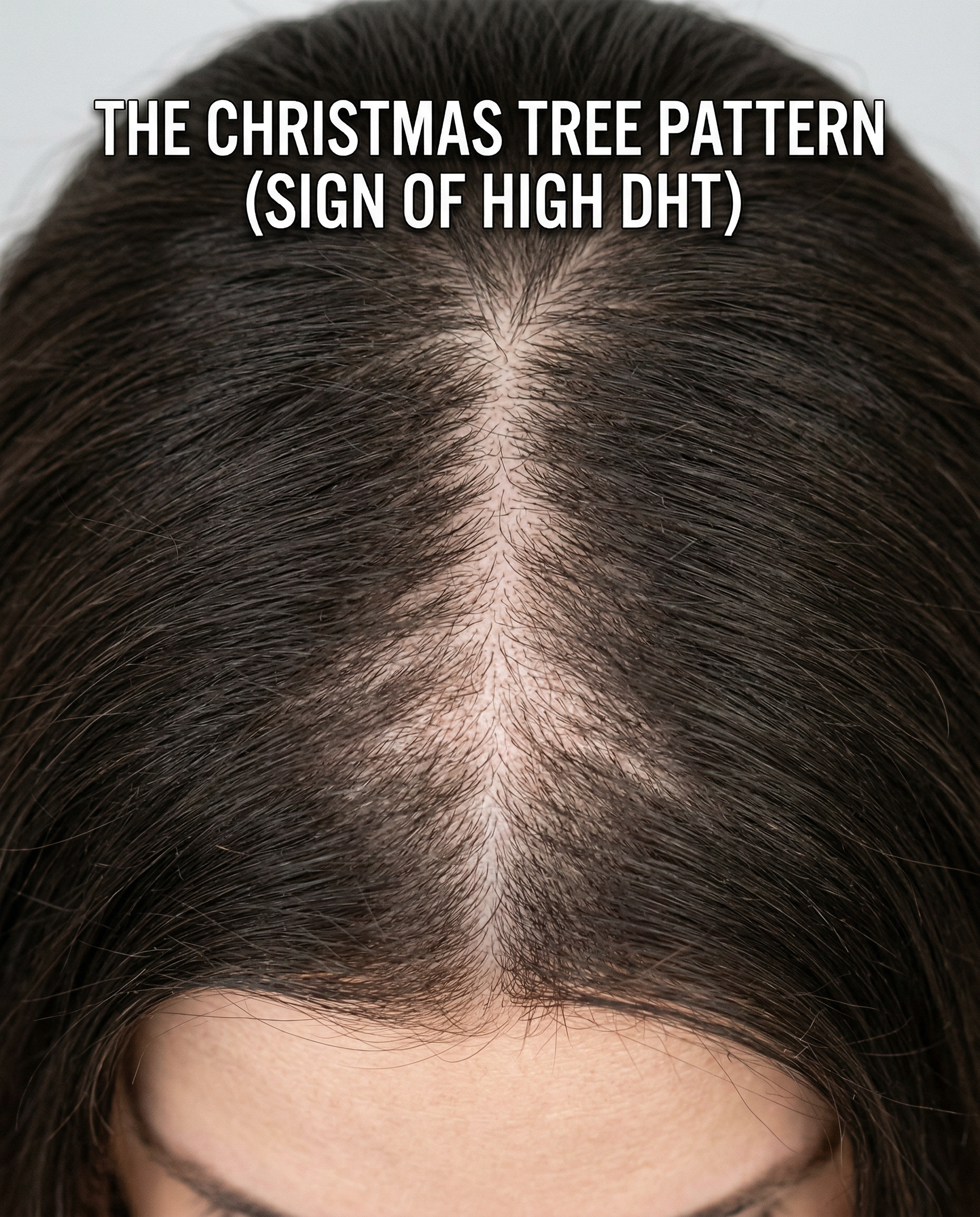
First, let's talk about what is actually happening in your scalp — because understanding this changes everything.
Losing some hair every day is normal. A healthy scalp naturally sheds between 50 and 100 hairs daily. Those hairs fall out because a new hair is pushing them out from below. The follicle is working exactly as designed.
Hair loss becomes a problem when the hairs falling out are not being replaced. That is the whole definition. More falling out than growing back.
Now, why does that happen? This is where it gets important — because there are several very different causes, and most women and men are treating the wrong one.
The Hormonal Shock (Telogen Effluvium)
The first cause, and the most common one in women under 50, is something called telogen effluvium.
That is a fancy name for a very simple thing. It means your body experienced a shock — physical or hormonal — and a large percentage of your follicles hit the off switch at the same time. This is exactly what happens after pregnancy.
During pregnancy, high estrogen levels tell your follicles to stay in the growth phase. Your hair gets thicker, shinier, longer. People tell you that you are glowing. That is real — it is biology.
Then the baby arrives. Estrogen crashes. Hard and fast. And all those follicles that were being held in the growth phase? They all receive the same signal at the same time: it is time to rest. And rest means shed.
Because telogen effluvium is hormonally triggered, it is technically temporary. Your follicles are not dead. They are not damaged. They are resting. And given the right internal conditions, they will wake back up.
The problem — and this is critical — is that the right conditions have to exist for that to happen. If your body is still under stress. If your scalp is inflamed. If cortisol is chronically elevated. If you are running low on nutrients... your follicles will stay in that resting phase far longer than they should.
Follicle Miniaturization (Androgenetic Alopecia)
The second cause is different. It is called androgenetic alopecia — female or male pattern hair loss. This one is slower. More gradual. And it is driven by a hormone called DHT.
DHT is derived from testosterone. DHT binds to receptors in the hair follicle and slowly shrinks it over time. Each growth cycle, the follicle produces a slightly thinner, shorter hair. Eventually, the hair becomes invisible. And eventually, the follicle stops producing hair altogether.
The Cortisol Spike
The third cause is stress — specifically, chronically elevated cortisol. Cortisol is released in response to stress. Short-term cortisol is fine. But chronic cortisol suppresses the signaling proteins that tell follicles to enter the growth phase. It essentially posts a stop sign at the entrance of the hair growth cycle.
Chapter Two
The Saboteurs.
Before we talk about what builds hair, we have to stop what is killing it. But first — I need to explain the biological rule that makes most hair products impossible to work. Because once you understand this, you will never waste money the same way again.
Imagine your scalp is a fortress. Its primary job is to keep bad things out. It acts like a microscopic net, and the mesh of that net has a specific size limit.
In science, the size of a molecule is measured in units called Daltons. The 500 Dalton Rule states that any molecule larger than 500 Daltons physically cannot pass through intact skin. It is too large to fit through the net. It sits on the surface, dries up, and washes away the next time you shower.
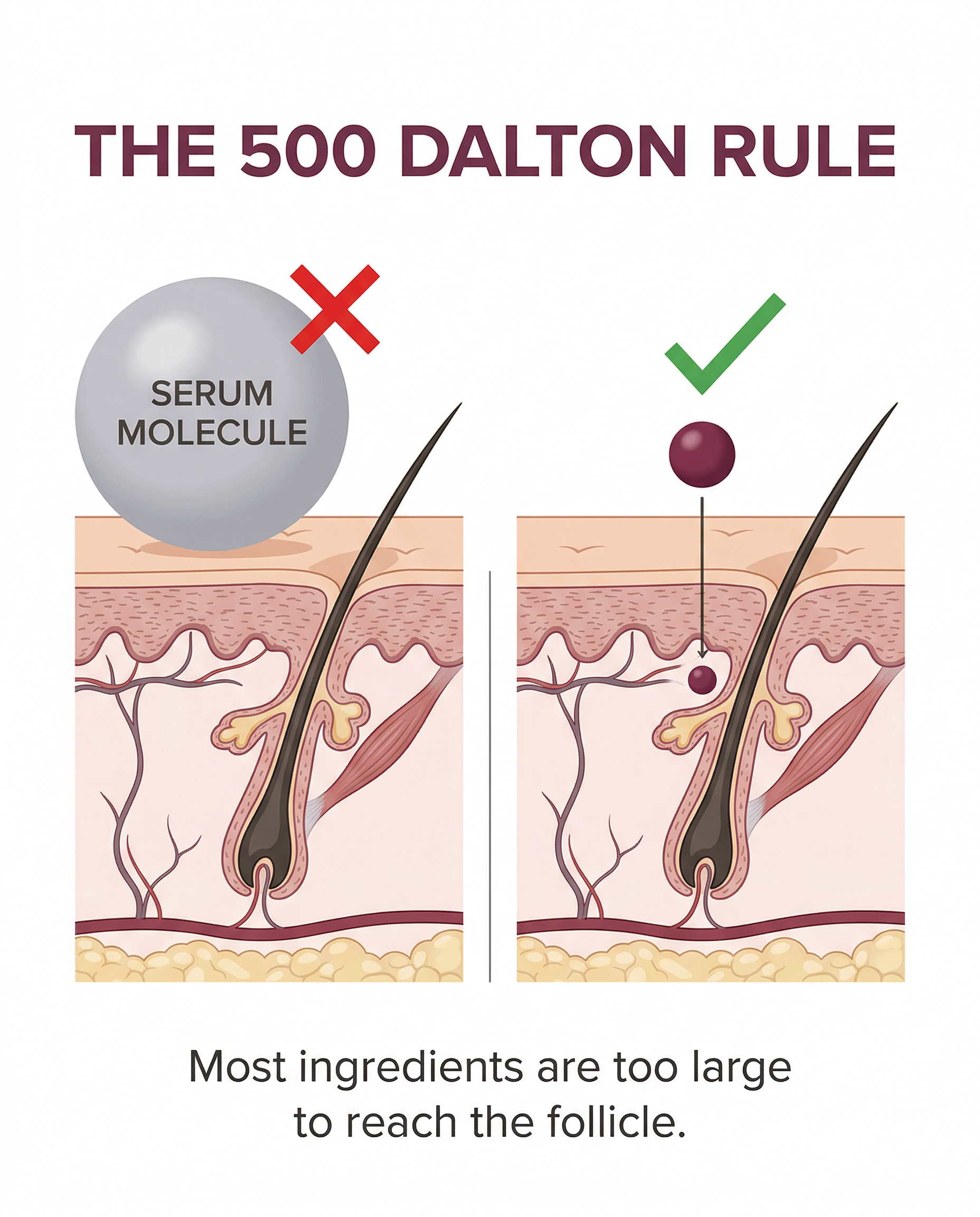
Now look at what is actually in most hair growth serums. Standard collagen molecules? Between 15,000 and 300,000 Daltons. High-molecular-weight hyaluronic acid? Over 1 million Daltons. Physically impossible. When you apply these products to your scalp, you are painting the outside of the fortress while the soldiers inside are starving.
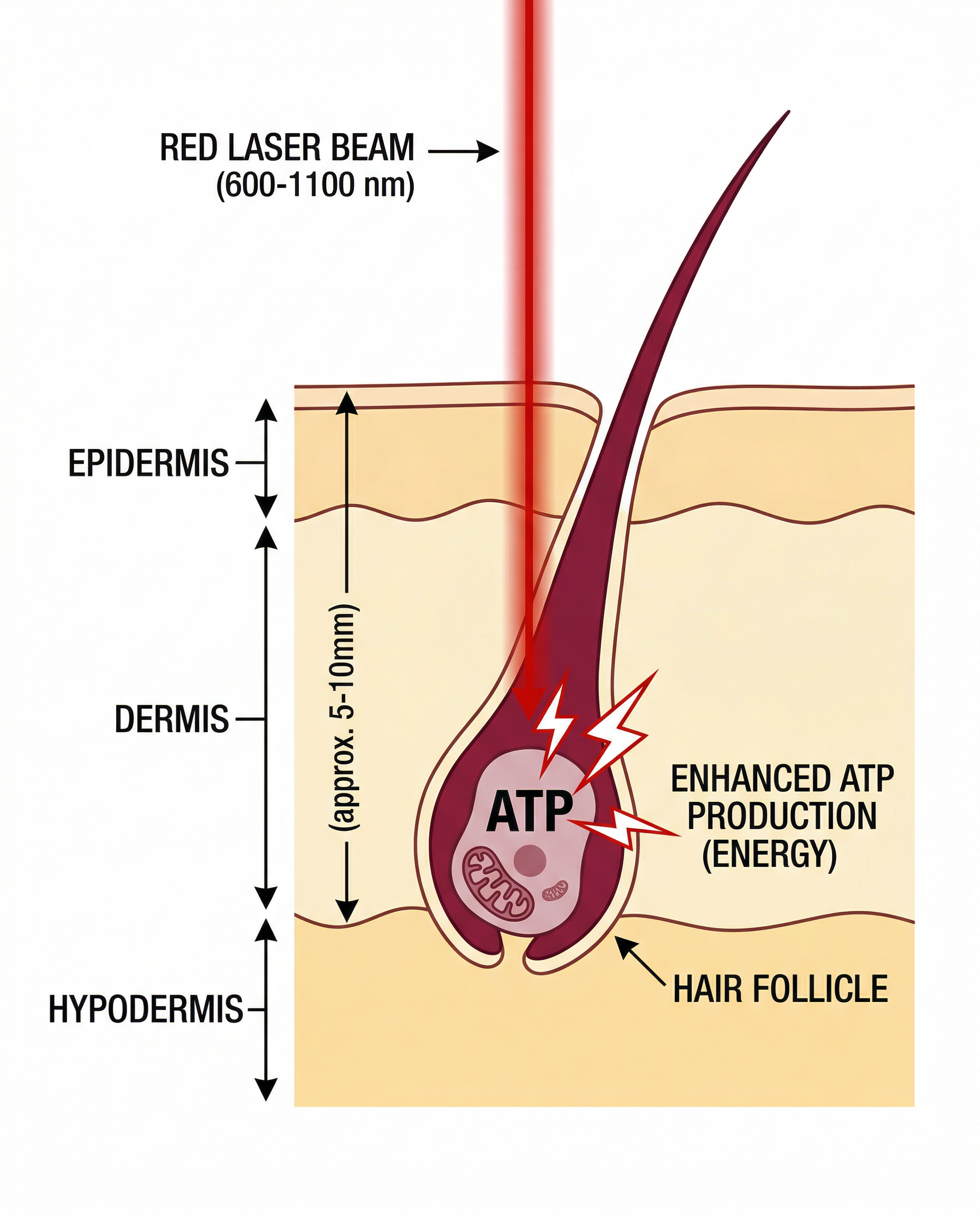
Light energy bypasses the barrier entirely. Light does not need to dissolve through skin. It penetrates tissue directly and reaches the mitochondria. That is why laser therapy is in a completely different category.
The Three Daily Saboteurs
Saboteur One: Silicones. Look at the ingredient list on your conditioner. If you see anything ending in -cone or -xane (Dimethicone), that is a silicone. It coats the hair shaft in a film that builds up, seals over the follicle opening, and blocks beneficial ingredients from getting in.
Saboteur Two: Sulfates. Look for Sodium Lauryl Sulfate (SLS). These are industrial detergents that completely strip your scalp of its natural protective acid mantle, creating chronic, low-grade inflammation.
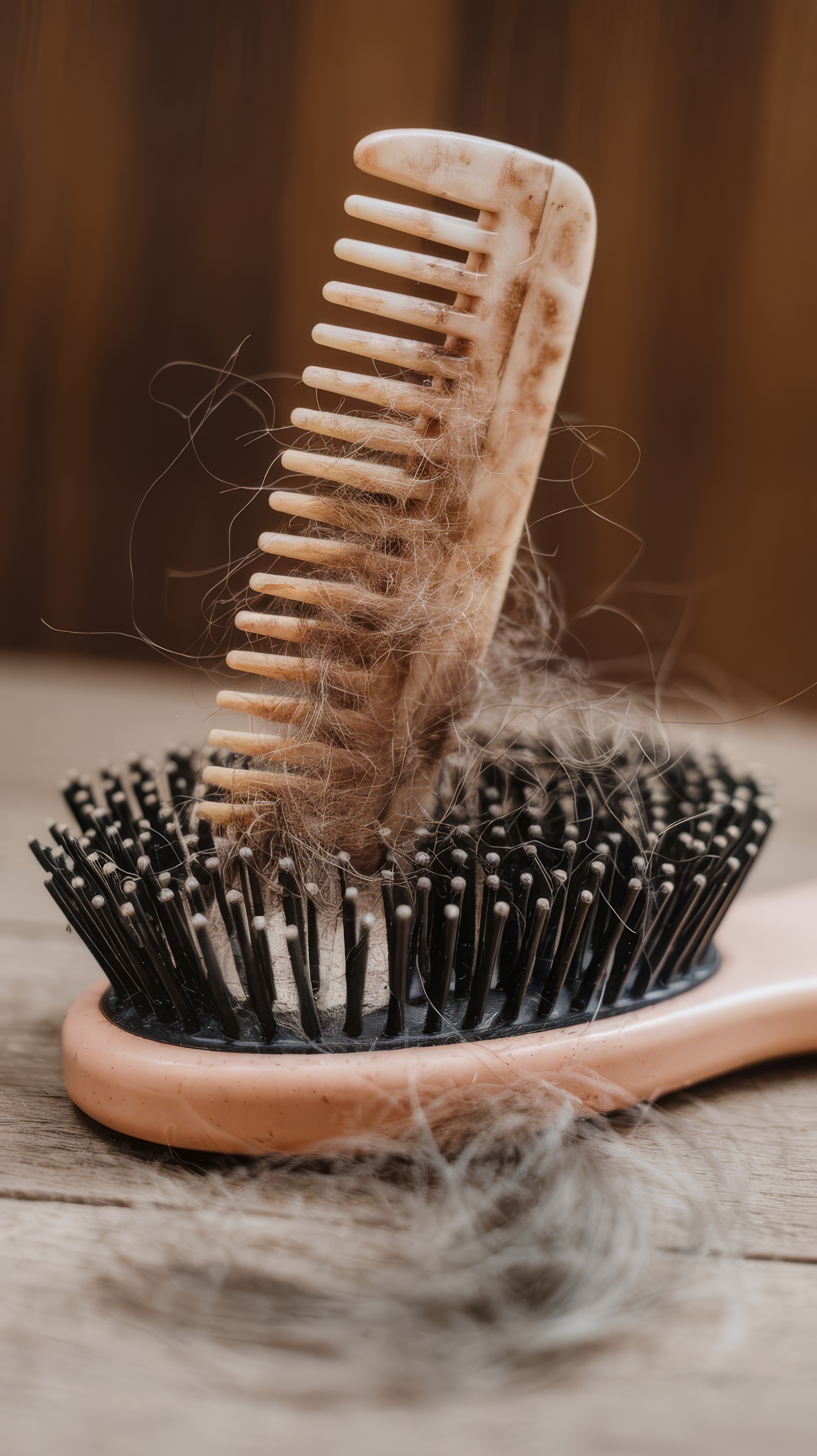
Saboteur Three: Mechanical Damage. Consistent tight ponytails and buns create traction alopecia. Daily heat boils the moisture out of the keratin structure. The behavior has to stop.
Chapter Two & A Half
Feed the Follicle.

Hair is not a priority organ. When your body is under stress or running low on key nutrients, hair gets cut from the supply chain first. Your heart, your brain, your immune system — they take what they need. Hair gets the leftovers.
Protein: The Foundation
Hair is made of keratin. Keratin is a protein. If you do not eat enough protein, your body reduces keratin production. Hair gets thinner and sheds faster. The target is 1.2 to 1.6 grams of protein per kilogram of body weight per day.
Iron: Your Ferritin Level
You can have completely normal iron levels on a standard blood test and still have hair loss. Serum iron is what floats in your blood. Ferritin is your storage bank. Hair follicles draw from ferritin.
Cortisol Management
Chronically stressed adrenal glands flood your system with cortisol. This suppresses growth signaling proteins, increases scalp inflammation, and disrupts deep sleep. Managing cortisol is not a lifestyle suggestion. It is a physiological requirement.
Zinc, Vitamin D, and Omega-3s
Zinc builds the hair shaft. Vitamin D receptors live directly inside hair follicles (optimal range: 40-60 ng/mL). Omega-3s reduce the chronic low-grade inflammation extending your telogen phase.
Chapter Three
What actually works.
I want to start with something important. There is no miracle cure for hair loss. Anyone who tells you otherwise is selling you something.
What does exist is a short list of interventions with real, replicated, peer-reviewed evidence behind them.
Low-Level Laser Therapy (LLLT)
The intervention with the strongest overall evidence base for non-pharmaceutical hair regrowth is LLLT. Inside every hair follicle are mitochondria. They produce ATP (cellular energy). When a follicle is dormant, ATP production drops.
LLLT devices emit red light (650-680nm) that passes directly through the scalp and stimulates the mitochondria to produce more ATP. The growth signal reactivates. The follicle wakes up. This bypasses the 500 Dalton rule entirely.
Minoxidil & DHT Blockade
Topical minoxidil works by extending the growth phase and increasing blood flow. It is 209 Daltons — small enough to penetrate. The catch: you have to use it indefinitely. If your hair loss is driven by a widening part, DHT is the mechanism. Blocking it directly (via prescriptions or saw palmetto) is a legitimate part of a protocol.
What Does NOT Work
Scalp massage alone requires months of daily dedication for very modest results. Castor oil is too thick and traps buildup. Instagram hair growth vitamins contain megadoses of biotin you simply flush out.
Chapter Four
The Dread Shed.
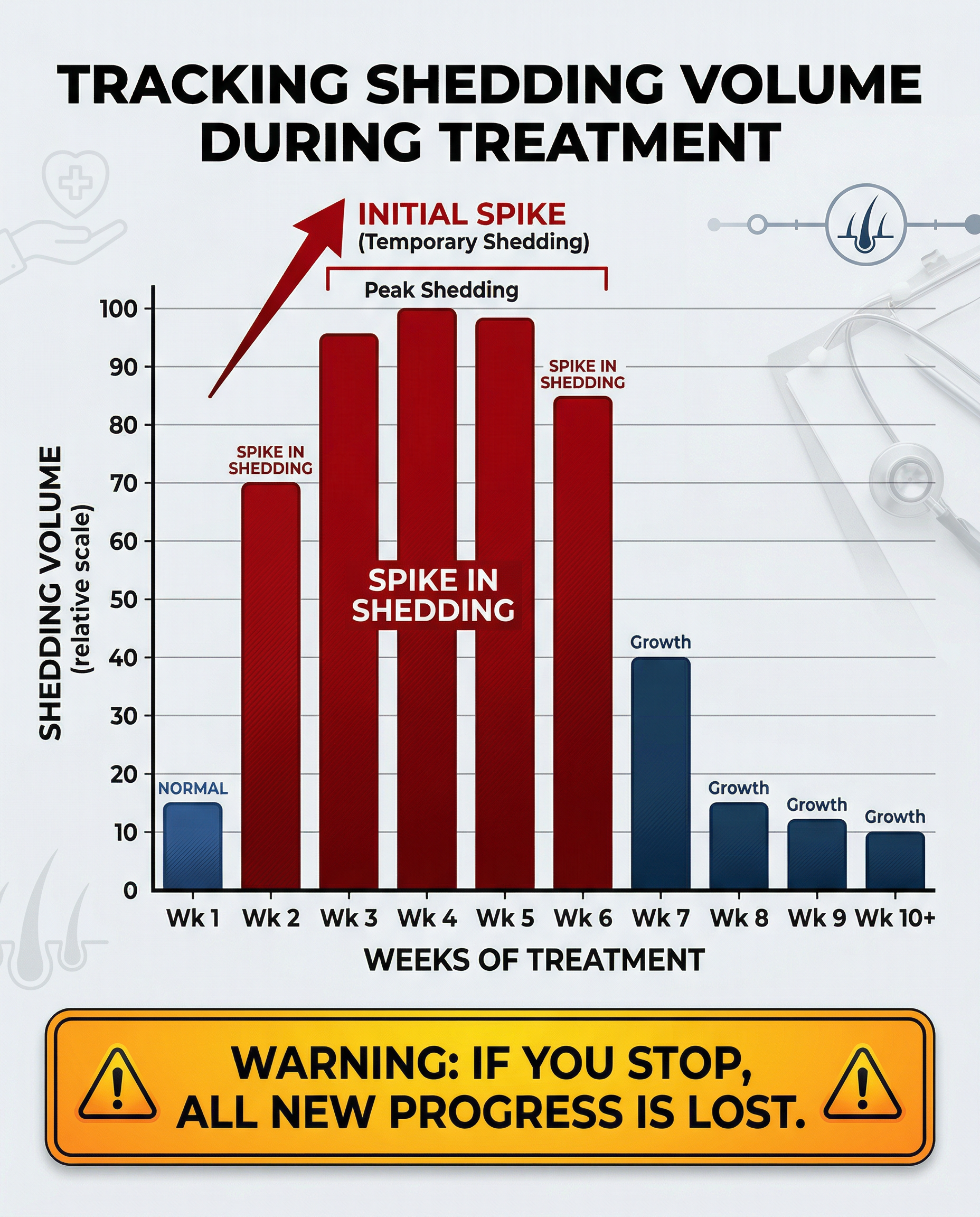
This is the most important chapter in this entire guide. I need you to hear this clearly.
When you start a real, effective hair recovery protocol — laser therapy, minoxidil, or a significant change to your scalp environment — something can happen between week four and week eight that will terrify you. Your hair might start falling out faster.
When you have thinning hair, a significant percentage of your follicles are stuck in the resting phase holding onto old, weak hairs. When laser energy or clinical topicals reach those dormant follicles, they receive a signal to wake up.
But to start a new growth cycle, the follicle must first evict the old, resting hair. That sudden increase in shedding in your shower drain is not your hair dying. That is old, resting hair being pushed out to make room for new, active growth underneath. It is the absolute proof that the treatment is working.
The Dread Shed typically lasts two to six weeks. Give any serious intervention a minimum of 120 days before making any judgment.
Chapter Five
The Cheat Codes.

Everything in this chapter is about stacking the environment in your favor. These are the habits that accelerate the recovery timeline.
1. Know your baseline numbers.
Get a blood panel that includes ferritin, Vitamin D, zinc, and thyroid function. You cannot fix a ferritin deficit with a laser. Spend the money on the right labs before spending thousands on a device. Know what you are dealing with.
2. The combination effect.
Hair loss is multi-causal. The users with the most dramatic documented results are consistently the ones who stacked protocols. LLLT plus dietary changes. LLLT plus cortisol management plus a clean scalp routine.
3. Protect your sleep.
Growth hormone is directly involved in cellular repair and follicle activation, and it is primarily released during deep sleep. Complete darkness, cool temperatures, and avoiding screens support the transition into slow-wave sleep.
4. Track without obsessing.
Do not stare in the mirror every morning. Take one set of photos — hairline, part, crown — every four weeks under the same lighting. What you see daily is random variation. What you see at week four, eight, twelve, and sixteen is the actual signal.
5. Give it the time the biology requires.
A complete follicle cycle takes four to six months. You will not see the full picture until month six. Do not quit at month two.
The Truth Is Yours Now.
Hair recovery is not fast. It is not glamorous. It is a consistent, informed effort over six months — with the right tools, aimed at the right problem, for the right amount of time. But it works.
Women and men get their hair back every day. Not because they found a miracle. But because they understood what was actually happening in their follicles — and they gave the right interventions the time they needed to do their job.
Go use it.
Ready to support your feed your scalp?
Your follicles need specific raw materials to rebuild the keratin structure. Access the same clinical nutrients and serums prescribed in this guide.
Shop Clinical Nutrients →