
Hair Loss vs. Thinning Hair
How to tell if you are shedding temporarily — or if you are crossing the point of no return.

The Survival Test
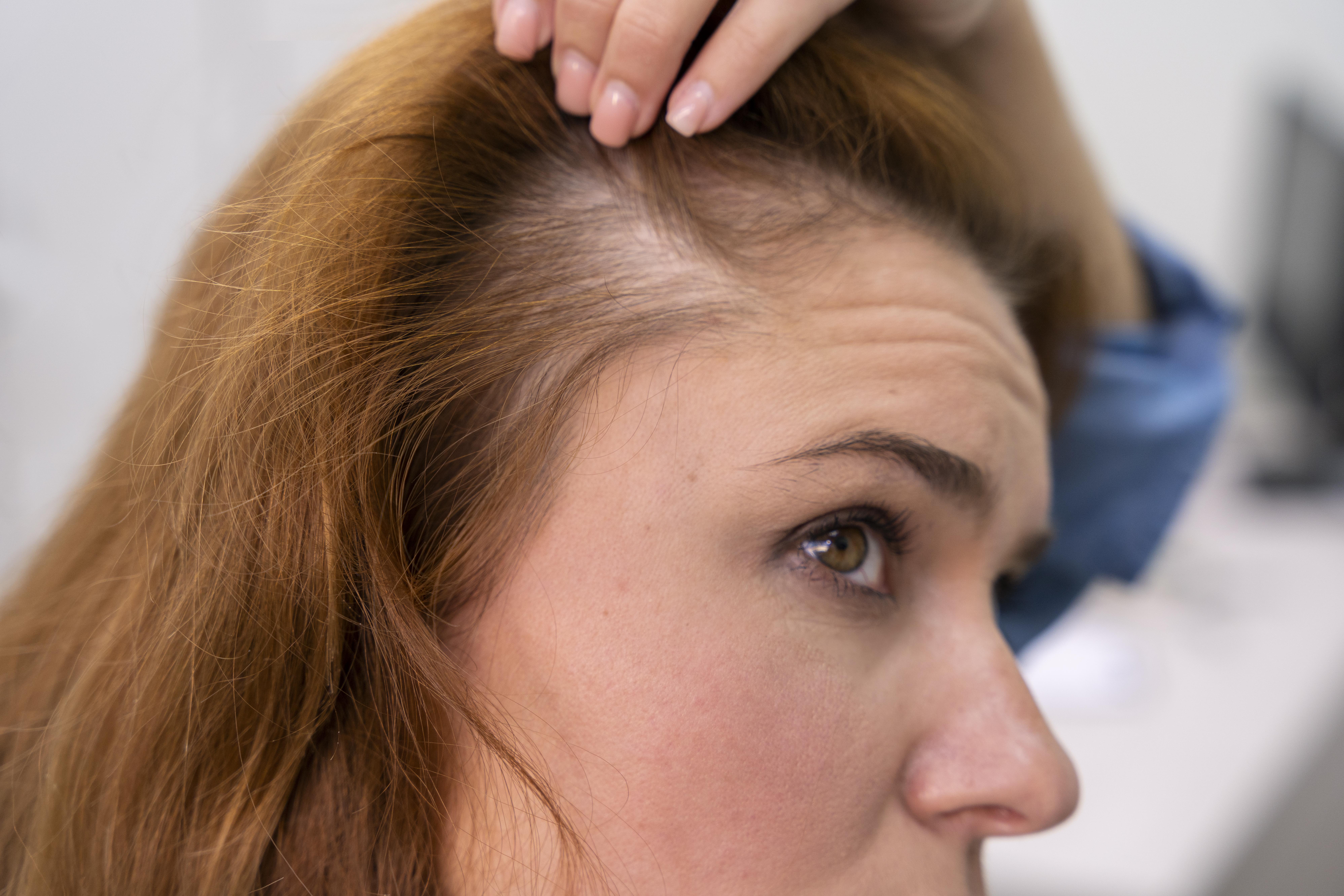
- Look closely at your thinning area right now under a bright overhead light.
- Do you see fine, light "peach fuzz" in the thinning areas?
- Or is the skin completely smooth and shiny?
The Biological Difference
Temporary Shedding (Telogen Effluvium): You see clumps in the shower drain. It is caused by an acute event — stress, a hormonal shift, illness, or a rapid diet change. It feels terrifying, but the follicle is structurally intact. It needs the trigger removed and time.
Permanent Thinning (Miniaturization): Your part line is widening, and you can see through your scalp. This is the Danger Zone. The blood supply to the follicle is actively being choked off. This does not resolve on its own.
"Follicles don't die suddenly. They weaken quietly. And once the blood supply stops completely, recovery odds drop sharply. Delay has a cost."
The Point of No Return
If you still have peach fuzz or fine hairs in the thinning area, your follicles are alive. But they are on a ticking clock. Once the blood supply stops completely and the skin turns shiny and smooth, no serum, pill, or laser in the world can bring it back.
Why Is Your Hair Thinning or Falling Out?
There are four confirmed triggers — and most women are dealing with more than one simultaneously.
1. Hormonal shift. Hormone changes after pregnancy cause postpartum telogen effluvium — follicles enter the resting phase en masse and shed all at once. Menopause leads to gradual thinning at the crown and part line as estrogen and progesterone drop. The hair is not dying. The signal that tells it to grow has been interrupted.
2. Follicle miniaturization. Follicles gradually shrink and the growth cycle shortens. New hairs grow back progressively finer and thinner. Eventually some follicles stop producing hair entirely. This requires intervention — not patience.
3. Nutritional block. Many women experiencing hair loss are deficient in iron and vitamin D without knowing it. Ferritin below 70 ng/mL — not just clinical deficiency, but the functional hair loss threshold — is one of the most underdiagnosed drivers. Zinc and protein restriction compound it.
4. Mechanical damage. Tight hairstyles, daily heat on wet or damp hair, and harsh chemical treatments accelerate shedding in follicles already under hormonal or nutritional stress.

What You Are Doing Right Now That Is Making It Worse
Stop all of these.
Tight updos and ponytails daily. Constant mechanical tension accelerates miniaturization at the hairline and temples. Alternate with loose styles or wear it down on rest days.
Buying topical biotin serums and collagen shampoos for regrowth. The 500 Dalton rule is documented dermatology: most active ingredients in topical products are too large to penetrate the skin barrier and reach the follicle. They land on the surface and wash off in the shower.
Supplementing biotin without a confirmed deficiency. Biotin deficiency is rare. If you are not deficient, supplementing does not accelerate growth. It interferes with thyroid lab readings — which matters when your hair loss has a hormonal component.
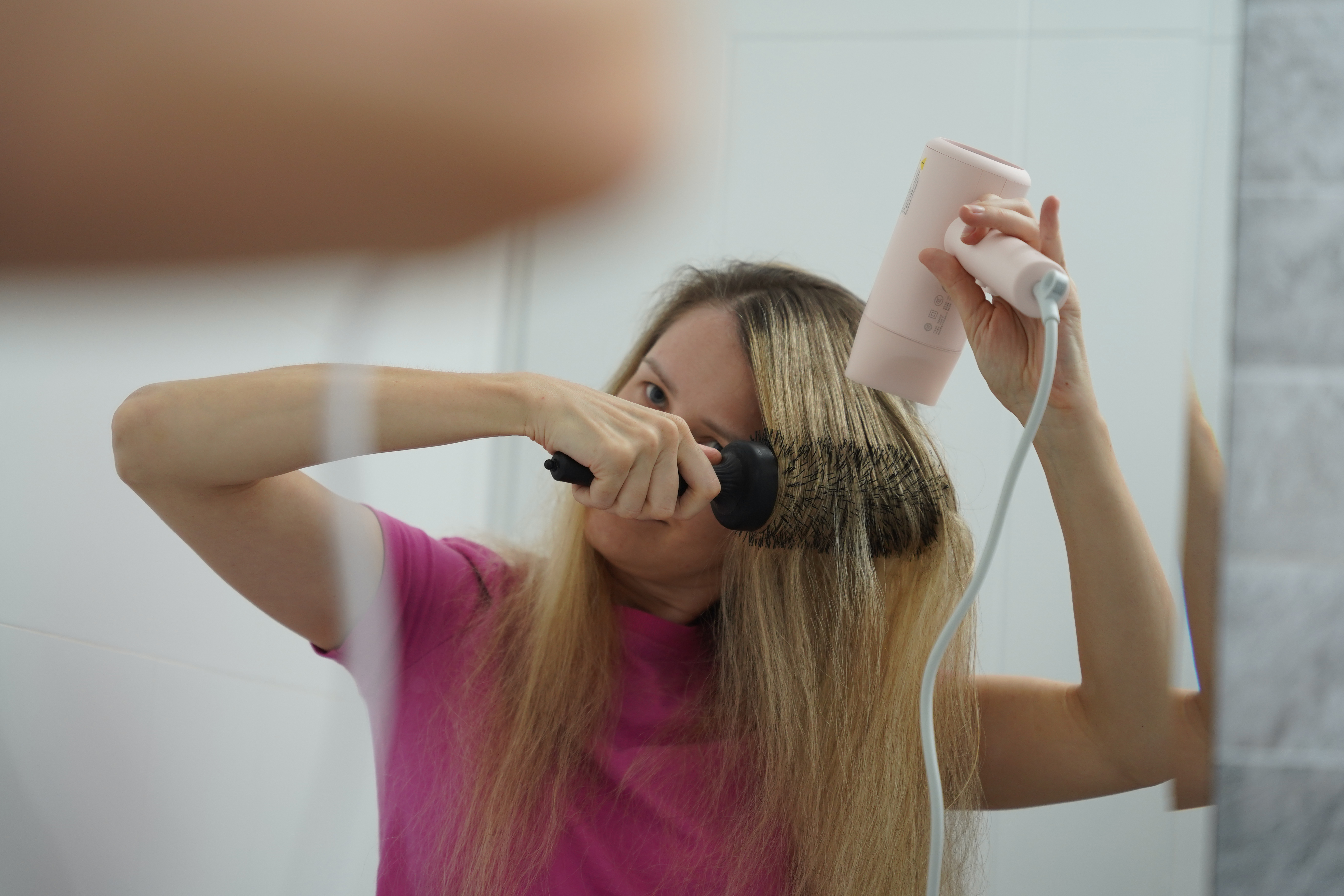
Heat styling on wet or damp hair. Wet hair has a compromised cuticle and is significantly more vulnerable to breakage. Air dry to at least 80% before any heat contact.
Waiting. Early intervention preserves follicle density and prevents permanent damage. Once the blood supply stops completely, no treatment reaches it. The window is open right now.
Thinning Hair Treatment: What the Evidence Actually Shows
Ranked by clinical evidence. Not by marketing spend.
Tier 1 — Clinical laser therapy (LLLT). The only at-home intervention that delivers energy directly to the follicle cell. A specific wavelength of red light — 655nm to 680nm — penetrates the scalp and activates the mitochondria inside the follicle. The cell produces energy. The growth cycle restarts.
FDA-cleared devices at 655nm–680nm are the only at-home treatment with this level of independent clinical evidence. Visible change begins at week 12. Do not judge the protocol before week 12.
Tier 2 — Scalp environment correction. Iron, vitamin D, and zinc confirmed through blood work — not assumed. Sulfate-free shampoo. Reduced heat frequency. Scalp massage to increase circulation. These remove the barriers that prevent Tier 1 from working.
Tier 3 — Oral botanicals. Saw palmetto has the strongest independent evidence among supplement ingredients.
Does not work — topical serums and shampoos for follicle regrowth. The 500 Dalton rule applies to every product in this category. Active ingredients cannot penetrate the skin barrier to reach the follicle under standard formulation.
Your 30-Day Starting Protocol
Implement in this order. Do not skip ahead.
Stop all tight styles. Stop heat on wet hair. Swap to a sulfate-free shampoo. Begin scalp massage for four minutes every wash day — fingertips only, firm circular pressure. Increases blood flow to the follicle with no drug interaction.
Get a blood panel: ferritin, vitamin D, zinc, thyroid (TSH and T4). Do not supplement blindly before this. If ferritin is below 70 ng/mL, that is the confirmed hair loss threshold. Supplement specifically to what the panel shows.
If your follicles still have peach fuzz, they are alive. This is the window. LLLT sessions of 17–30 minutes at 655nm–680nm, three to five times per week. Skipping sessions resets the cellular response.
Photograph your part line under the same overhead light at the same time of day. Every 30 days, repeat under identical conditions. Hair regrowth is so gradual that most people abandon effective treatments before they can see the results.

The Emergency Brake
If you are in the miniaturization phase — part line widening, scalp visible through the hair, no peach fuzz — you must act immediately. Clinical laser therapy forces blood vessel dilation, restoring oxygen and nutrients to the starving root before it closes for good. The window is finite.
Ready to hit the emergency brake?
If you still have peach fuzz, you still have time. See the FDA-cleared clinical laser system built around this protocol.
View Clinical Laser Systems →
The Hair Truth Audio Series
Five clinical chapters. Listen during your laser session, your commute, anywhere. Free — no catch, no credit card.
No spam. Unsubscribe anytime.